
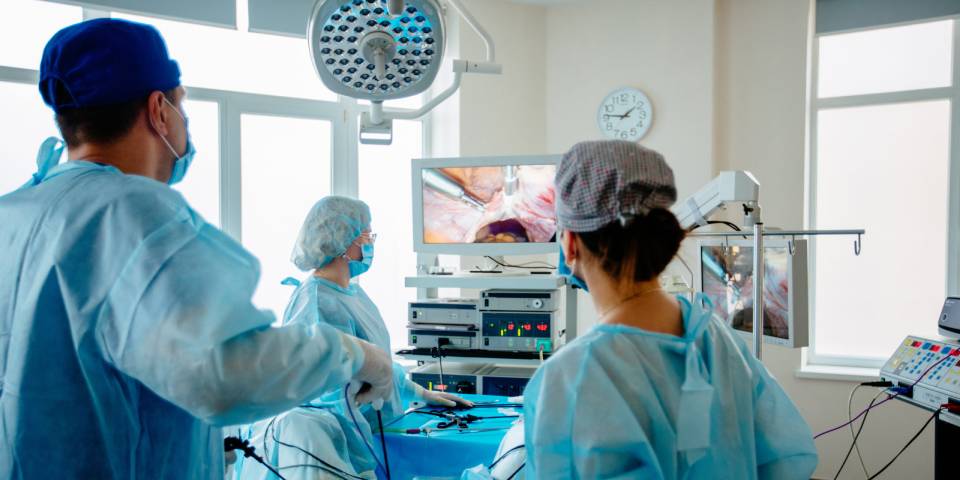
Laparoscopic surgery, also known as keyhole surgery, is a minimally invasive surgical technique that uses small incisions and a thin tube with a laparoscope, camera, and light to perform the surgery. This allows the surgeon to see the inside of the body on a monitor and perform surgery without making a large incision. Compared to traditional open surgery, laparoscopic surgery results in less pain, scarring, and faster recovery time. Dr. Bhushan Chittawadgi is a highly skilled laparoscopic surgeon in Bangalore with extensive experience in performing complex laparoscopic procedures.
Laparoscopic surgery, also known as keyhole surgery, is a minimally invasive surgical technique that uses small incisions and a thin tube with a laparoscope, camera, and light to perform the surgery. This allows the surgeon to see the inside of the body on a monitor and perform surgery without making a large incision. Compared to traditional open surgery, laparoscopic surgery results in less pain, scarring, and faster recovery time. Dr. Bhushan Chittawadgi is a highly skilled laparoscopic surgeon in Bangalore with extensive experience in performing complex laparoscopic procedures.
How does laparoscopic surgery work?
Laparoscopic surgery, also known as keyhole surgery, is a minimally invasive surgical technique that uses small incisions and specialized tools to access and operate on internal organs. The surgeon makes small incisions and inserts a thin, lighted tube called a laparoscope, which transmits images of the inside of the body to a monitor. Using specialized tools inserted through other small incisions, the surgeon can manipulate, cut, and suture tissue. Laparoscopic surgery typically results in less scarring, less pain, and a faster recovery time compared to traditional open surgery, making it a popular choice for many procedures.
Conditions treated with laparoscopic surgery:
Laparoscopic surgery, also known as minimally invasive surgery, is a surgical technique used to treat a variety of medical conditions. Some of the conditions that can be treated with laparoscopic surgery include
- Gallbladder disease,
- Hernias,
- Appendicitis,
- Gastroesophageal reflux disease (GERD)
- Some types of cancer.
Laparoscopic surgery involves making small incisions in the abdomen and using a tiny camera and specialized instruments to perform the procedure. Compared to traditional open surgery, laparoscopic surgery typically results in less pain, shorter hospital stays, and faster recovery times.
What to expect during laparoscopic surgery?
During laparoscopic surgery, a surgeon will make a few small incisions in the abdomen and insert a laparoscope – a thin, lighted tube with a camera on the end – allowing them to see inside the body. Other specialized instruments are then inserted through additional small incisions to perform the necessary surgery. Patients can expect a shorter recovery time, less scarring, and less pain compared to traditional open surgery. Laparoscopic surgery is commonly used for procedures such as gallbladder removal, hernia repair, and appendectomy.
Recovery after laparoscopic surgery:
Recovery after laparoscopic surgery is generally faster and less painful than traditional open surgery. Patients are usually able to return to their normal activities within a few days to a week. However, it is important to follow post-operative instructions carefully to minimize the risk of complications. This may include avoiding heavy lifting or strenuous exercise for several weeks, taking pain medication as prescribed, and keeping the incision site clean and dry. It is also important to attend any follow-up appointments with your doctor to ensure a smooth and successful recovery.
Dr. Bhushan Chittawadagi is considered the best laparoscopic surgeon in Bangalore due to his extensive experience and expertise in laparoscopic surgery, use of advanced technology, and patient-centered approach to care, resulting in excellent outcomes and patient satisfaction.