
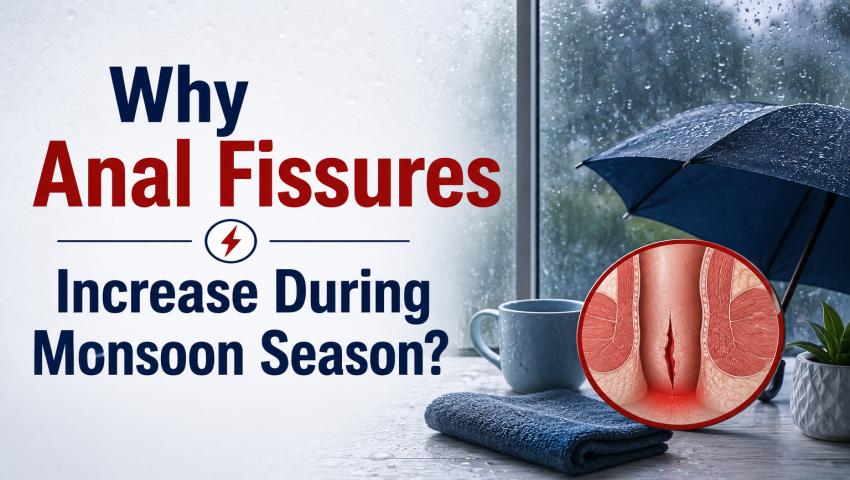
Monsoon brings relief from the summer heat. But it also brings a set of digestive and colorectal health problems. One such common problem is anal fissures.
Many patients visit Dr. Bhushan Chittawadagi — Trusted name for fissure treatment in Bangalore and a leading Gastroenterologist and Laparoscopic GI Surgeon — with complaints of pain, bleeding, and discomfort in the anal region during the rainy season.
With 18+ years of experience, 10,000+ successful surgeries, and 15,000+ happy patients, Dr. Bhushan Chittawadagi has maintained a 95% success rate in treating complex gastroenterological and colorectal conditions. He understands how seasonal changes impact your digestive health.
In this blog, we explain why anal fissures are more common during monsoon and what you can do to protect yourself.
What Is an Anal Fissure?
An anal fissure is a small tear or cut in the lining of the anus. It causes sharp pain during bowel movements. You may also notice bright red blood on tissue paper or in the toilet.
Fissures can be acute (short-term) or chronic (long-term). Chronic fissures need proper medical attention. Without treatment, they can worsen and affect your daily life.
Why Are Anal Fissures More Common During the Monsoon?
The monsoon season creates conditions that directly impact bowel health. Here are the main reasons:
- Dehydration Despite Cooler Weather: You may not feel thirsty during the rainy season. But your body still loses water. When you don’t drink enough fluids, your stool becomes hard and dry. Passing hard stools puts pressure on the anal canal. This leads to small tears — the beginning of a fissure.
- Reduced Physical Activity During Rainy Days: Most people prefer to stay indoors during heavy rains. Less physical movement slows down bowel activity. This leads to sluggish digestion and irregular bowel habits — a key trigger for fissures.
- Increased Risk of Constipation: Constipation is one of the biggest causes of anal fissures. During monsoon, changes in diet and reduced activity increase the risk of constipation. Straining during a difficult bowel movement tears the anal tissue. Chronic constipation treatment in Bangalore is one of the core services offered at Dr. Bhushan Chittawadagi’s clinic. If you suffer from recurring constipation, do not ignore it.
- Monsoon Diet Changes and Digestive Problems: People tend to eat more spicy, fried, and processed foods during rainy weather. Think samosas, pakodas, and street-side snacks. These foods are low in fibre and hard to digest. They can cause bloating, irregular motions, and harder stools — all of which increase the risk of fissures.
- Higher Chances of Gastrointestinal Infections: Monsoon increases the risk of waterborne infections like gastroenteritis, typhoid, and food poisoning. These infections cause severe diarrhoea or loose motions. Frequent loose motions can irritate and damage the sensitive anal lining, causing fissures or worsening existing ones.
- Weak Digestion and Gut Health Issues During Monsoon: Ayurvedic tradition and modern medicine both acknowledge that digestion weakens during the monsoon. The body’s gut microbiome gets disrupted due to infection, unhealthy food, and reduced physical activity. Poor gut health directly affects bowel regularity — and irregular bowels lead to fissures.
Common Symptoms of Anal Fissures:
Watch out for these warning signs:
- Sharp, burning pain during or after bowel movements
- Bright red blood on stool or toilet paper
- Itching or irritation around the anal area
- Visible tear or crack near the anus
- A small lump or skin tag near the fissure (in chronic cases)
- Fear of going to the toilet due to pain
If you experience any of these symptoms, consult a specialist without delay.
How to Prevent Anal Fissures During the Rainy Season?
Simple lifestyle changes can make a big difference:
- Drink at least 8–10 glasses of water every day, even when it’s not hot outside
- Eat a high-fibre diet with fruits, vegetables, and whole grains
- Do light indoor exercises like yoga or stretching to keep bowels active
- Avoid straining during bowel movements
- Use the toilet when you feel the urge — do not hold it in
- Maintain good anal hygiene — clean gently with water after each motion
- Avoid prolonged sitting on the toilet
Best Foods to Eat During Monsoon to Prevent Anal Fissures:
What you eat directly affects your stool consistency. Include these gut-friendly foods in your monsoon diet:
- Papaya — natural laxative, softens stools
- Banana — helps regulate bowel movements
- Oats and barley — rich in soluble fibre
- Bottle gourd (lauki) and ridge gourd (turai) — easy to digest and hydrating
- Warm soups and dal — soothing for digestion
- Buttermilk (chaas) — restores gut bacteria
- Flaxseeds — excellent source of fibre and healthy fats
Avoid spicy, oily, and fried foods as much as possible during the rainy season.
Home Remedies That May Help Relieve Anal Fissure Symptoms:
If you have mild symptoms, these home measures may offer some relief:
- Sitz bath — sit in warm water for 15–20 minutes, 2–3 times daily. It relaxes the anal muscles and reduces pain.
- Coconut oil application — has mild antimicrobial and moisturising properties. Apply gently on the affected area.
- Stay hydrated — drinking warm water with lemon helps digestion.
- Psyllium husk (Isabgol) — mix in water and drink before bed to soften stools.
- Aloe vera gel — can soothe irritation and inflammation externally.
Please note: Home remedies can help manage mild discomfort. But they are not a substitute for medical treatment. If symptoms persist for more than a week, please see a doctor.
When Should You See a Doctor for an Anal Fissure?
You should consult a specialist if:
- Pain during bowel movements is severe or unbearable
- You notice significant bleeding
- Symptoms have lasted for more than 2–3 weeks
- You have a history of chronic constipation
- Home remedies are not giving relief
- You see a visible lump or abscess near the anus
Do not delay. Untreated fissures can become chronic and may need surgical intervention.
Treatment Options for Chronic Anal Fissures:
Chronic fissures do not heal on their own. They need proper treatment. The good news is — effective options are available for every stage.
- Diet and Lifestyle Changes:- This is always the first step. Eat more fibre, drink plenty of water, and stay active. These simple changes soften the stool and reduce straining. They also help in chronic constipation treatment in Bangalore.
- Topical Creams and Ointments:- Doctors often prescribe medicated creams for mild fissures. Common options include lignocaine (for pain relief), GTN ointment (to relax the anal muscle), and diltiazem cream (to improve blood flow). These work well for early-stage fissures.
- Botox Injections:- If creams do not help, Botox injections are the next step. The injection relaxes the tight anal muscle. This reduces pain and lets the fissure heal naturally. It is a quick procedure with very little discomfort.
- Lateral Internal Sphincterotomy (LIS):- This is the most effective surgery for chronic fissures. A small part of the anal sphincter muscle is cut. This removes pressure from the fissure and helps it heal permanently. Recovery is fast and pain relief is almost immediate. As a trusted Colorectal Surgeon in Bangalore, Dr. Bhushan Chittawadagi performs LIS using the latest minimally invasive techniques. His patients recover quickly and comfortably.
- Fissurectomy:- In some cases, the fissure tissue is removed surgically. This is done when the fissure is very deep or has a large skin tag. Fresh tissue grows back and heals better.
The right treatment depends on your condition. Consult Dr. Bhushan Chittawadagi for personalised fissure treatment in Bangalore.
Why Choose Dr. Bhushan Chittawadagi for Fissure Treatment in Bangalore?
When it comes to fissure treatment in Bangalore, Dr. Bhushan Chittawadagi is a name thousands of patients trust.
He is one of the most respected Gastroenterologists in Bangalore, practising at HOSMAT Hospital, Kalyan Nagar and Trilfe Hospital, HRBR Layout. He specialises in laparoscopic and minimally invasive procedures for digestive and colorectal conditions.
As an experienced Colorectal Surgeon in Bangalore, Dr. Bhushan Chittawadagi brings deep expertise in treating fissures, fistulas, piles, hernias, and complex GI conditions. His patients come from across Karnataka and beyond.
Here’s why patients choose him:
- 18+ years of surgical and gastroenterological experience
- 10,000+ surgeries performed with precision
- 15,000+ happy patients treated
- 95% success rate — one of the best in Bangalore
- Trained under C Palanivelu, a global legend in laparoscopic surgery
- Winner of prestigious international awards, including the KS National Robotic Surgery Video Award 2021 and multiple Best Paper & Video Awards at global conferences
Whether your fissure is acute or chronic, you are in safe and experienced hands with Dr. Bhushan Chittawadagi.
📍 HOSMAT Hospital, No. 2, Hennur Cross, Kalyan Nagar, Bengaluru – 560043
📍 Trilfe Hospital, 7th Main Rd, HRBR Layout, Kalyan Nagar, Bengaluru – 560043
📞 8940770990
🌐 www.drbhushan.in
Conclusion:
The monsoon season silently affects your gut health. Dehydration, poor diet, infections, and reduced activity all contribute to anal fissures during the rainy months. The good news is that with the right diet, hydration, and care, you can prevent them.
And if you are already experiencing symptoms, do not suffer in silence. Early treatment is always easier, safer, and more effective.
Trust the expertise of Dr. Bhushan Chittawadagi — the best Gastroenterologist in Bangalore — to guide you back to health. Book your consultation today.