Hernia Specialist in Bangalore
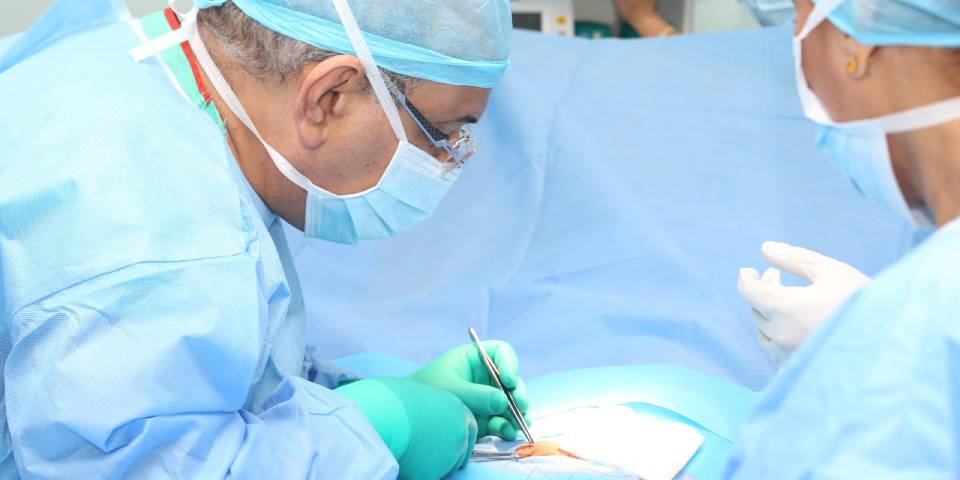
Hernia is a common surgical condition that affects thousands of people every year. It occurs when an internal organ or tissue pushes through a weak spot in the surrounding muscle or tissue wall. If left untreated, a hernia can gradually become painful and lead to serious complications. If you are searching for a Hernia Specialist in Bangalore, Dr. Bhushan Chittawadagi is a trusted name for advanced and safe hernia treatment. With 18+ years of experience and more than 10,000 successful surgeries, he is recognised also one of the Best Gastroenterologists in Bangalore.
Dr. Bhushan Chittawadagi is an experienced Advanced Laparoscopic and GI Cancer Surgeon practicing at HOSMAT Hospital and Trilfe Hospital, Bangalore. He specialises in minimally invasive and robotic surgeries that allow faster recovery, minimal pain, and smaller scars. He has received multiple national and international awards, including recognition from the Korean Society of Endoscopic & Laparoscopic Surgery and the Vattikutti Foundation, USA, for excellence in laparoscopic and robotic surgery.
With a 95% surgical success rate and more than 8000 happy patients, Dr. Bhushan Chittawadagi focuses on patient-centred care using modern technology and evidence-based treatment.
What is a hernia?
A hernia occurs when an organ or fatty tissue pushes through a weak area in the surrounding muscle or connective tissue. This weakness creates a bulge under the skin that may become more visible when standing, coughing, or lifting heavy objects.
Hernias can occur in different parts of the body, but they are most commonly seen in the abdomen and groin region. Many people ignore early symptoms such as a small swelling or mild discomfort. However, untreated hernias can grow larger over time and may cause severe pain or complications like intestinal obstruction.
Consulting an experienced Best Hernia Surgeon in Bangalore like Dr. Bhushan Chittawadagi helps in early diagnosis and effective treatment.
What are the Types of Hernias?
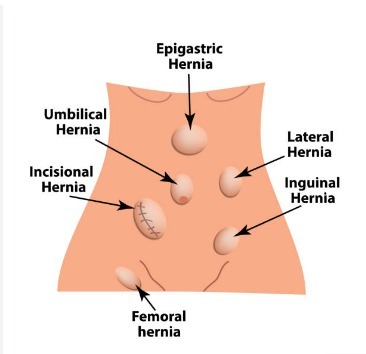
A hernia can occur anywhere in the abdomen region. Patients will normally notice a lump, or discomfort, at the site of the hernia. The most common types of hernia are:
- Inguinal hernia – when tissue (usually part of the intestines) pokes through your lower abdomen.
- Femoral hernia – when tissue pokes through into your groin, or the top of your inner thigh.
- Incisional hernia – when tissue pokes through a surgical wound or incision that has not fully healed.
- Umbilical/Paraumbilical hernias – when tissue pokes through the part of the abdomen directly through or immediately around the navel (belly button)
- Epigastric Hernia – when tissue pokes through into the upper part of the abdomen
- Spigelian hernia – This is a rare type of hernia that appears on the edge of one of the rectus abdominis muscles (these muscles are described as the “six-pack” which are readily seen in athletic individuals) 4 or 5 cm below the “belly button”.
What are the causes of Hernia?
Hernias usually develop due to a combination of muscle weakness and strain. Some people are born with weak abdominal muscles, while others develop them later in life.
Common causes include:
- Heavy lifting without proper support
- Chronic coughing
- Long-term constipation
- Obesity
- Pregnancy
- Age-related muscle weakness
- Previous abdominal surgery
- Straining during bowel movements
People with physically demanding jobs or those who frequently lift heavy weights are at higher risk.
Early consultation with the Gastroenterologist, such as Dr. Bhushan Chittawadagi, helps prevent complications.
Signs and Symptoms of Hernia:
The symptoms of a hernia can vary depending on the type and size. Some hernias may not cause pain initially but can gradually worsen.
Common symptoms include:
- A visible swelling or lump in the abdomen or groin
- Pain or discomfort while lifting or bending
- Burning or aching sensation at the bulge
- Heaviness in the abdomen
- Pain during coughing or straining
- Weakness or pressure in the groin
- Nausea or vomiting in severe cases
If the hernia becomes trapped or strangulated, it may block blood supply to the intestine. This is a medical emergency and requires immediate treatment.
If you notice any unusual swelling in the abdomen or groin, consult a Hernia Specialist as soon as possible.
How Hernia is Diagnosed by Dr.Bhushan Chittawadagi?
Accuracy is the foundation of effective treatment. When you visit Dr. Bhushan Chittawadagi at HOSMAT Hospital or Trilfe Hospital, he follows a thorough diagnostic process:
- Physical Examination: Most hernias are diagnosed through a simple physical check where the doctor feels for a bulge while you cough or strain.
- Medical History: Understanding your lifestyle, previous surgeries, and symptoms.
- Imaging Tests: To confirm the size and type of hernia, he may recommend an Ultrasound, CT Scan, or MRI.
- Endoscopy: If a hiatal hernia is suspected, an upper GI endoscopy may be performed to check the esophagus and stomach.
Treatment Options for Hernia
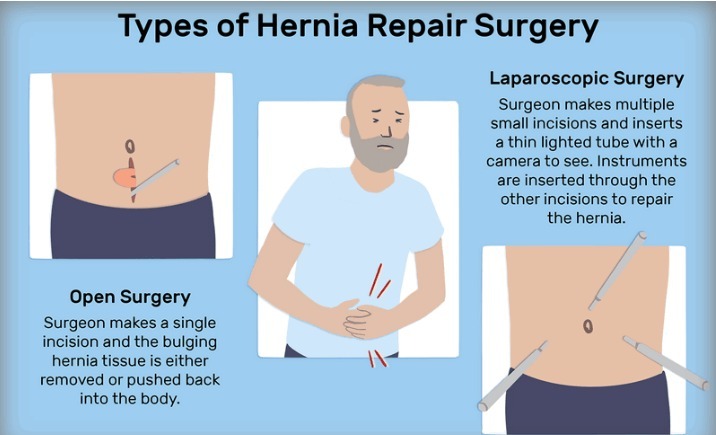
Hernias do not heal on their own. Surgery is the most effective treatment to repair the weak abdominal wall and prevent complications.
- Laparoscopic Hernia Surgery
This minimally invasive surgery uses small incisions and a camera to repair the hernia. A mesh is placed to strengthen the abdominal wall and prevent recurrence.
Benefits:
- Smaller cuts and less pain after surgery
- Faster recovery and early return to daily activities
- Minimal scars and lower infection risk
- Short hospital stay
- Effective and safe hernia repair
- Robotic Hernia Surgery
Robotic surgery uses advanced technology controlled by the surgeon. It provides better precision and clear vision for complex hernia repairs.
Benefits:
- High precision and better control during surgery
- Clear 3D view of the surgical area
- Less pain and faster healing
- Suitable for complex hernia cases
- Improved surgical outcomes
- Open Hernia Surgery
Open surgery involves a larger incision to repair the hernia directly. It is recommended for large or complicated hernias.
Benefits:
- Effective for large or complicated hernias
- Direct repair of weak abdominal muscles
- Suitable when laparoscopic surgery is not possible
- Mesh reinforcement reduces recurrence
- Safe and reliable treatment option
Dr. Bhushan Chittawadagi, a trusted Hernia Specialist in Bangalore, provides advanced laparoscopic and robotic hernia treatment for safe surgery and faster recovery.
How much does Hernia Surgery cost in Bangalore?
Dr. Bhushan Chittawadagi is one of the best hernia surgeon in Bangalore. Hernia surgery in Bangalore is a very affordable and low-cost procedure that takes very little time to operate and does not require a long doctor’s stay. Hernia Surgery in Bangalore cost Starting from ₹ 55,ooo. The cost of hernia surgery depends on many factors. While the starting price is ₹ 55,000, the average price is ₹ 65,000, the maximum price is ₹ 110,000 it only depends on the type of surgery, patient’s condition, surgeon’s skill, location, and hospital cost.
Why Choose Dr. Bhushan Chittawadagi for Hernia Treatment in Bangalore?
Choosing the right surgeon is very important for safe and successful hernia treatment. An experienced specialist can ensure accurate diagnosis, proper surgical planning, and faster recovery. Many patients trust Dr. Bhushan Chittawadagi, a leading Hernia Specialist in Bangalore, for advanced and reliable hernia care.
18+ Years of Surgical Experience: Dr. Bhushan Chittawadagi has more than 18 years of experience in gastrointestinal and laparoscopic surgery. His strong clinical background helps him treat both simple and complex hernia cases with confidence and precision.
10,000+ Successful Surgeries
He has successfully performed over 10,000 surgeries, including many advanced laparoscopic procedures. His vast surgical experience ensures safe treatment and excellent outcomes for patients.
Advanced Laparoscopic & Robotic Techniques: Dr. Bhushan Chittawadagi specialises in minimally invasive and robotic hernia surgery. These modern techniques help patients experience less pain, smaller scars, quicker recovery, and shorter hospital stay.
Highly Qualified Surgical Gastroenterologist: He completed MBBS from Shri B M Patil Medical College, MS in General Surgery from Government Medical College, Solapur, and super-specialisation in Surgical Gastroenterology from GEM Hospital, Coimbatore, one of India’s leading centres for laparoscopic surgery.
National and International Awards: Dr. Bhushan Chittawadagi has received several prestigious awards for his excellence in laparoscopic and robotic surgery, including:
- Best JnJ Sponsorship Award (2021) at the Korean Society of Endoscopic & Laparoscopic Surgery International Congress, Seoul, South Korea.
- KS National Robotic Surgery Video Award (2021) awarded by the Vattikutti Foundation, USA.
- Best Video Award for Robotic McKeown’s Esophagectomy (2020) at the Annual Conference of Clinical Robotic Surgery Association (CRSA), India.
- Best Paper Award (AMASICON 2018) for laparoscopic surgery research in gastric cancer.
These recognitions highlight his expertise in advanced gastrointestinal and laparoscopic surgery.
Patient-Centred Care: Dr. Bhushan Chittawadagi believes in clear communication and personalised care. He carefully explains the condition, treatment options, and recovery process so that patients feel confident and comfortable.
In conclusion, choosing Dr. Bhushan Chittawadagi for hernia treatment ensures that you will receive expert, compassionate, and comprehensive care. With his extensive experience, advanced technology, and commitment to positive outcomes, you can trust that you are in good hands.
Talk To Dr. Bhushan Chittawadgi:
Dr. Bhushan Chittawadgi is a consultant and an Advanced Laparoscopic, Gastro, and GI Cancer Surgeon practicing at Hosmat Hospital, Bangalore, Karnataka. He has more than 18 years of experience in the field of Laparoscopic GI & HPB Surgery making him one of the best laparoscopic surgeons in Bengalore. He is specialized in Laparoscopic hernia surgery, Gall bladder stone, Obesity, liver and pancreas diseases, GI surgery, Piles, and Breast & Thyroid diseases. If you are looking for the best laparoscopic hernia surgeon call us at +91 89407 70990 or book an online appointment here.
Frequently Asked Question (FAQ):
Who is the best hernia doctor in Banagalore?
Dr. Bhushan Chittavadgi is one of the best hernia surgeons in Bangalore with over 18 years of experience in the field of basic and advanced hernia surgery. His experience in the field of laparoscopic GI and HPB surgery makes him the best hernia surgeon in Bangalore, Karnataka.
How many days of rest are required after hernia surgery?
Most people can return to work within 1 to 2 weeks after surgery. But if your job requires that you do heavy lifting or strenuous activity, you may need to take 4 to 6 weeks off from work. You may shower 24 to 48 hours after surgery if your doctor okays it. Pat the cut (incision) dry.
How many days of rest are required after hernia surgery?
Most people can return to work within 1 to 2 weeks after surgery. But if your job requires that you do heavy lifting or strenuous activity, you may need to take 4 to 6 weeks off from work. You may shower 24 to 48 hours after surgery if your doctor okays it. Pat the cut (incision) dry.
How much bed rest is required after hernia surgery?
Umbilical hernia surgery recovery time is about two weeks. This two-week restriction helps reduce pain after surgery, and likely reduces the risk of a hernia recurrence.
Can I sit after hernia surgery?
Sitting: for several days after surgery sitting may be uncomfortable. You may have to get up and move around and change positions periodically. Stairs: no limitations. Lifting: for the first-week lifting is limited to 20 pounds.
Does smoking affect Hernia?
Yes, smoking can increase the risk of developing a hernia. Smoking weakens the muscles and connective tissue in the body, which can lead to the development of hernias. Additionally, smoking can increase coughing, which can put pressure on the muscles and increase the risk of a hernia.
What is the risk/complication of hernia surgery?
The risks and complications of hernia surgery can include bleeding, infection, injury to surrounding organs or structures, nerve damage, chronic pain, and recurrence of the hernia. However, these risks can be minimized with careful surgical technique and post-operative care. Your surgeon can discuss these risks with you and help you make an informed decision about your treatment options.
How do you feel during the procedure?
It’s like taking a small nap! All you will feel is a small needle prick during your preparation for the procedure. The surgery usually takes about 20 minutes. Occasionally, only the area with the hernia is anesthetized and you will be awake and probably having a chat with your doctor!
What Happens After the Operation?
Anesthesia will wear off within 2-3 hours after surgery, following which you will gradually be able to move your limbs. Do not take anything by mouth for 4-6 hours after surgery. You can then start with sips of water followed an hour later by a regular full diet, unless advised otherwise ( In a few cases you may need to wait for a day before you resume your regular diet ). As the anesthesia wears off, there may be difficulty in passing urine for the first time. However, this returns to normal and you will be able to pass urine as usual. Mild pain is expected after the surgery which is easily managed with painkillers.
When can I go home?
If your operation is planned as a daycare procedure you can go home as soon as the effect of the anesthetic has worn off, you have passed urine and you are comfortable, eating and drinking. Since a general anesthetic is used frequently used, it is advisable that a responsible adult take you home and stay with you for 24 hours. At times you may be given a discharge after 24 hours in which case you may need to stay in the hospital for a night. Before you are discharged you will be advised about post-operative care, painkillers, and antibiotics.
How long will it take for my complete recovery after the treatment?
This time frame cannot be generalized, as the recovery depends on various factors like the type of hernia you have, the extent of the hernia, your general health and medical condition, the type of surgery, and the expertise of the operating surgeon. As you may have earlier read, in most surgeries you will be discharged from the hospital on the same day or within 24 hours. In the beginning, there may be discomfort during walking, climbing up and down a staircase, and during movement. However, this is easily controlled with painkillers and you should be pain-free within a couple of days.
When can I return to my routine and activities?
In most of cases, the answer would be ‘as soon as you feel you can’. How soon you can also depend on the type of work you do and your normal level of activity. Typically one can return sooner to a sedentary job (3-5 days) than one that involves strenuous physical activity or lifting weights ( 4-6weeks ). This question is best discussed with your operating surgeon.
When should I take help?
Fever > 101 degrees F
Pain not relieved by prescribed medicines
Unusual bleeding
Persistent nausea or vomiting